
Thicker Base & Head Gaskets on a Small-Displacement Engine
1. Why Use Thicker Head Gaskets?
A thicker head gasket increases the distance between the piston crown and the cylinder head at top dead centre (TDC). Depending on the engine configuration, this can provide additional piston-to-head clearance and increase combustion-chamber volume. The trade-off is that excessive clearance can weaken the squish effect, reducing the mixture turbulence that helps combustion.
This approach may be useful when adapting a piston, cylinder or cylinder head that differs from the original engine design.
For example, additional clearance may be required when:
- A replacement piston has a different crown profile or compression height.
- The piston protrudes too far above the cylinder at TDC.
- Measured piston-to-head clearance is insufficient.
- A modified engine combination requires different clearances.
- The original cylinder-head and piston geometry has changed.
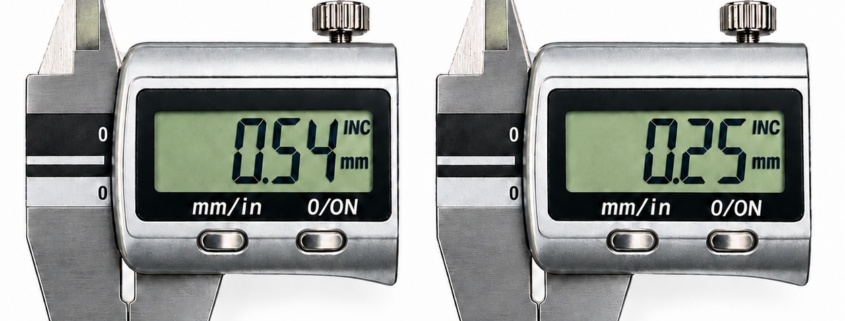
On a small-displacement engine, a difference of just a few tenths of a millimeter can materially affect the final geometry.
The Importance of Squish Clearance
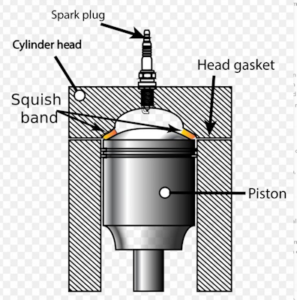
The space between the piston crown and the cylinder head’s squish area influences the movement of the air-fuel mixture as the piston approaches TDC.
Increasing this clearance excessively can reduce squish-generated turbulence and alter combustion characteristics. It also increases the volume above the piston at TDC, generally reducing the static compression ratio when other dimensions remain unchanged.
The objective is not simply to maximize clearance, but to achieve the appropriate clearance for the complete engine configuration.
2. Why Use a Thicker Base Gasket?
A base gasket sits between the cylinder and crankcase. Increasing its thickness raises the cylinder relative to the crankcase and changes the piston’s position relative to the cylinder at TDC and bottom dead centre (BDC).
This can affect several important dimensions:
- Piston deck height: the position of the piston crown relative to the cylinder top at TDC.
- Squish clearance: the combined effect of piston position, crown geometry and cylinder-head geometry.
- Compression ratio: changes in piston position can alter the volume above the piston at TDC.
- Cam-chain geometry: raising the cylinder changes the relative positions of the crankshaft and camshaft.
- Piston-skirt engagement: the amount of skirt supported within the cylinder depends on the cylinder position, piston profile and stroke.
A thicker base gasket may be a deliberate part of an engine design. However, its effects need to be evaluated as part of the complete assembly rather than in isolation.
3. What Happens When Both Gaskets Are Thicker?
When both the base and head gaskets are substantially thicker than the original specifications, their combined effects on engine geometry can be significant.
A thicker base gasket raises the cylinder, while a thicker head gasket increases the separation between the cylinder and cylinder head.
These changes influence piston position, combustion-chamber volume and clearances. Their effects are not necessarily additive in every respect, because the final result depends on the dimensions of the piston, cylinder, cylinder head and combustion chamber.
For a modified small-displacement engine, the relevant measurements include:
- Piston deck height at TDC.
- Actual piston-to-head or squish clearance.
- Combustion-chamber volume and static compression ratio.
- Piston-to-valve clearance, where applicable.
- Cam timing and cam-chain adjustment range.
- Piston-skirt engagement throughout the stroke.
The important question is whether the final engine geometry is correct for the intended application, not simply whether a thicker gasket provides more clearance.
4. Piston-Skirt Length and Cylinder Support
Piston-skirt design is another important consideration in a small-displacement performance engine.
The skirt helps guide the piston within the cylinder and contributes to controlling piston movement under the changing loads encountered during operation.
Raising the cylinder with a thicker base gasket changes the relationship between the cylinder and the piston throughout the stroke. Depending on the piston and cylinder geometry, this can change the amount of skirt engagement available near TDC and BDC.
Reduced skirt engagement may affect piston guidance and stability. However, the actual effect must be assessed using the piston profile, cylinder dimensions and stroke rather than gasket thickness alone.
This is why piston-skirt length should be considered alongside piston design, cylinder construction, operating clearances and the intended RPM range.
5. The Wild Boar Engineering Approach
Wild Boar specializes in purpose-designed performance piston and cylinder kits for small-displacement engines.
The Wild Boar Honda Navi 125cc kit uses a 53 mm high-compression piston and an alloy racing cylinder, designed as a combination for the original Honda Navi engine platform.
Rather than relying on substantially thicker-than-standard gaskets as a universal solution, the Wild Boar approach is to design the piston, cylinder and intended gasket combination together.
The objective is to achieve the required engine geometry while retaining appropriate clearances and the intended relationship between the piston, cylinder and cylinder head.
Technical Information & Comparison Disclaimer
This article is provided for general technical and educational information. Engine geometry, gasket thickness, piston dimensions and clearances can vary between individual engines, components and applications. Any measurements, observations or comparisons are based on products, specifications and information available to APB Auto at the time of publication.
References to third-party products or brands are made for identification and technical comparison purposes only. This article discusses differences in design, specifications and engineering approaches and is not intended to suggest that another manufacturer’s product is defective, unsafe or unsuitable for its intended application.
Engine modifications should be assessed as a complete system. Appropriate measurements, clearances and assembly requirements should be verified before the engine is operated.
Wild Boar products are designed and marketed by APB Auto. APB Auto is not affiliated with, sponsored by, or endorsed by any third-party manufacturer referenced in this article unless expressly stated.


